




Quality Control and Testing
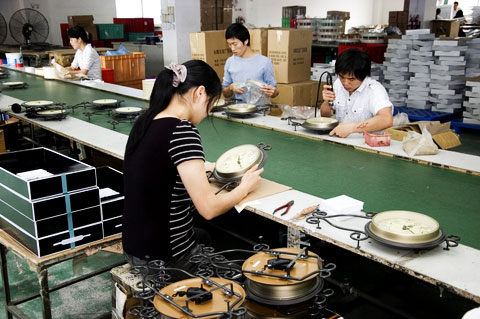
SDM Asia will follow your order throughout the manufacturing process. We guarantee the end product will match your approved sample. Regular checks before, during and after the production ensure that we maintain the high standards we expect from all the deliveries we make. If you require further assurance we also work closely with the internationally renowned third part Q/C house, SGS.
SGS is the world's leading inspection, verification, testing and certification company. Recognized as the global benchmark for quality and integrity, SGS employs 59,000 people and operates a network of more than 1,000 offices and laboratories around the world.
Not only can they handle the FRI (Final Random Inspection) they can also be counted on to make sure that anything shipped complies with international standards. They offer a full range of tests to make sure that all environmental and safety requirements are exceeded on anything we make.
SDM Asia Standards of Business Conduct
SDM Asia is committed to conducting business in a manner that reflects our high ethical and moral standards. We ensure that our business partners respect and adhere to the same business philosophy. We seek strict compliance with these standards from all contractors, subcontractors, suppliers and production facilities, with respect to child labour, health and safety and environmental safety.
At SDM Asia, we conduct our activities in a manner that respects human rights as set out in the United Nations Universal Declaration of Human Rights. We do not use any form of slave, forced, bonded, indentured or involuntary prison labour. We do not engage in human trafficking or exploitation, or import goods tainted by slavery or human trafficking. We support fundamental human rights for all people. We will not employ underage children or forced labourers. We prohibit physical punishment or abuse. We respect the right of employees to associate or not to associate with any group, as permitted by and in accordance with applicable laws and regulations.
SDM Asia has proudly run its business in Asia since 2010, We have always been committed to providing quality products but this has been backed by a recognition that as a global company we have responsibilities to ensure adequate protection for our own workforce and those of our suppliers.
SDM Asia Global Supply Chain
As a global business, SDM Asia works with suppliers from many countries of diverse cultural, social and economic circumstances. We expect our suppliers, independent businesses in their own right, to support our expectation of fundamental rights for all people, as defined in our policies: to treat their employees with fairness, respect and dignity, and to follow practices that protect health and safety for the people working in their facilities. Just as we are committed to fair employment practices and a safe, healthful and productive work environment for our employees, we expect our suppliers to hold their own suppliers to these same standards.
Slavery and Human Trafficking Policies
SDM Asia's commitment to respect human rights is defined in our Standards of Business Conduct, which apply to all employees SDM Asia, and in our Supplier Code of Conduct, which applies to SDM Asia suppliers globally.
As set forth above, the SDM Asia Standards of Business Conduct addresses expectations with respect to human rights, including the prohibition of human trafficking. SDM Asia employees are required to show their understanding of and commitment to upholding the Standards.
SDM Asia Global Supplier Code of Conduct
SDM Asia Supplier Code of Conduct applies to all suppliers in our supply chain and every supplier is required to acknowledge the Code annually. The Supplier Code of Conduct sets standards that help our suppliers understand SDM Asia's expectations, including the requirement to respect the rights set out in the UN Universal Declaration of Human Rights, and to require that their suppliers, in turn, do the same. Slavery and human trafficking are specifically addressed in the Supplier Code of Conduct, which states: Suppliers shall not use any form of slave, forced, bonded, indentured, or involuntary prison labour. They shall not engage in human trafficking or exploitation, or import goods tainted by slavery or human trafficking. They shall not retain employees' government issued identification, passports or work permits as a condition of employment.
Human rights risk management and due diligence process
SDM Asia has a risk management process in place to assess risk within our supply chain, including modern slavery. SDM Asia provides guidance to suppliers on complying with our standards, including the SDM Asia expectation that suppliers hold their supply chains to the same high standards. Suppliers are expected to understand our expectations and are required to appraise their current practices and management systems.
Due diligence is in the form of third-party monitoring firms conducting on-site announced and unannounced audits of suppliers. Examples of due diligence are a physical inspection of the facility, including the housing and cafeterias for the workers. In addition, the monitoring firms also conduct private worker interviews and review facility records and business practices to assess compliance with the SDM Asia Supplier Code of Conduct. Modern Slavery risks are addressed specifically as part of the audit, including verifying that workers are not charged illegal fees by the supplier or a third-party employment agency. Moreover, the third-party monitoring firm reviews hiring practices to ensure workers are employed under voluntary conditions, including confirming that worker contracts are in the local language and signed by the worker, and workers have freedom of movement, including confirming that workers have the option of retaining all personal identification documentation. Instances of non-compliance are shared with the supplier during in an audit report. If the supplier fails in meeting our standards, with instances of significant non-compliance, SDM Asia will remove them from the supply chain.